Friday, March 31, 2006

The count down begins
It seems that I am working towards or looking forward to a lot of things currently.

This morning hubby left for the last hockey "tournie" of the year. If all goes for him he will come home victorious on Sunday. If all goes well for me he will be home on Saturday. ...of course I don't wish them any bad luck ...but

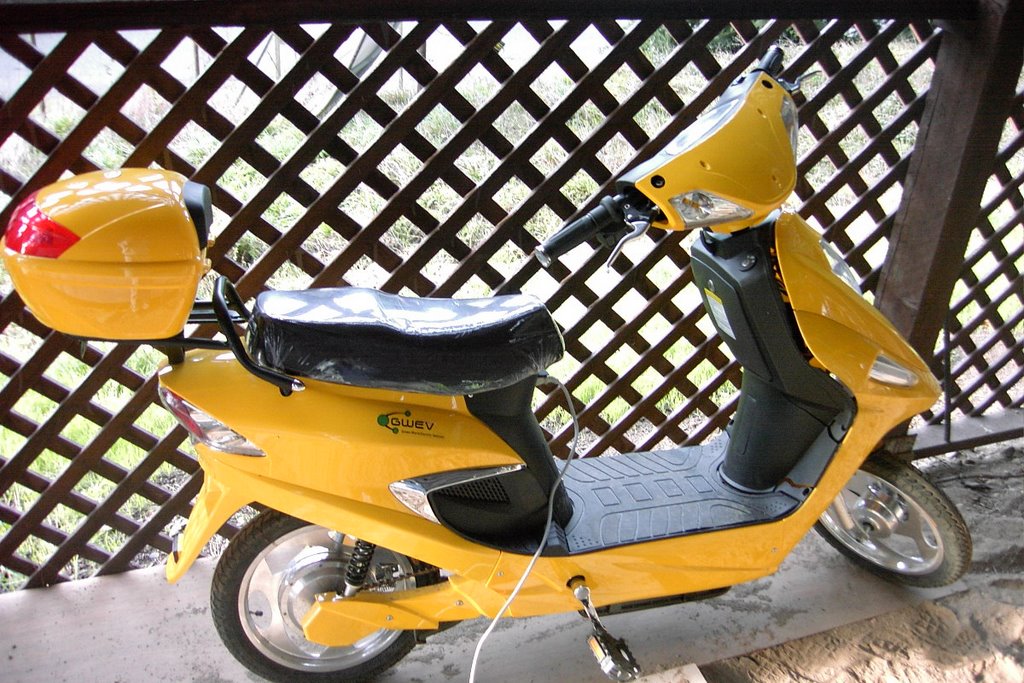
My bike continues to receive much needed care. I am told that it will be another week. ...another week of sunshine. ...another week of perfect bike riding weather. ...another week without.
My web site is managed by a capable, talented web designer. Unfortunately, many happy customers have found her. So her desk is full. I attempt to wait patiently for my web site updates.
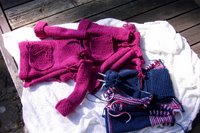
ArtCraft has informed me that they are waiting patiently for my inventory list. They will continue to wait patiently until April 19th. Will I make the deadline? Hope so.
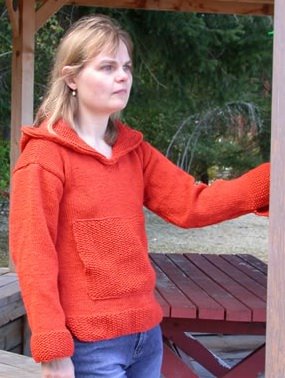
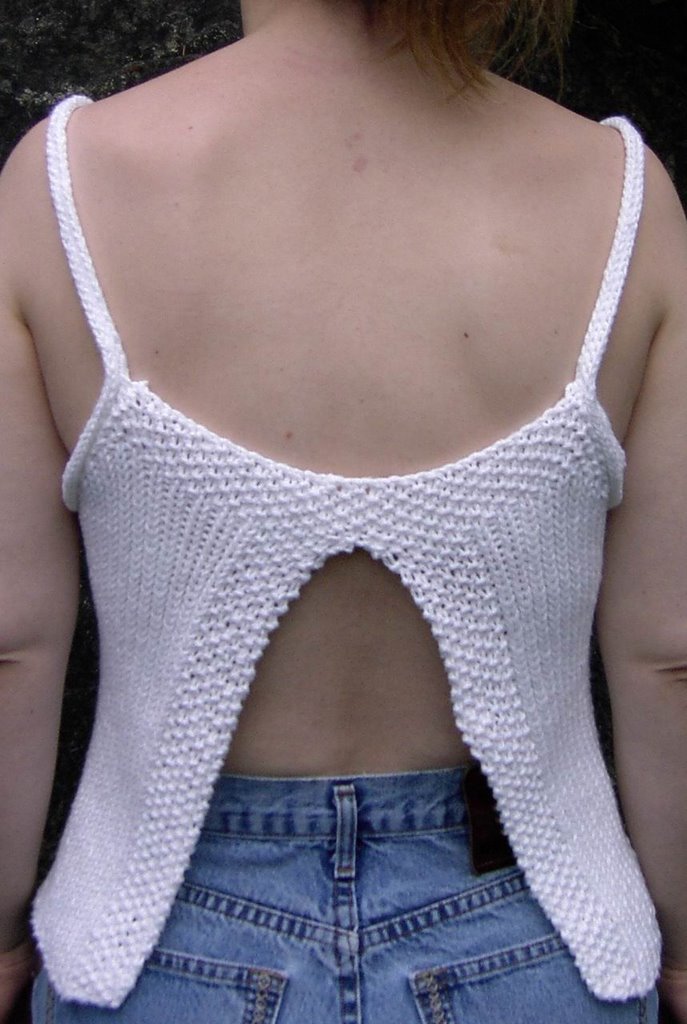
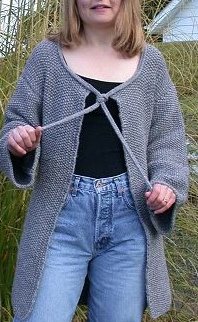
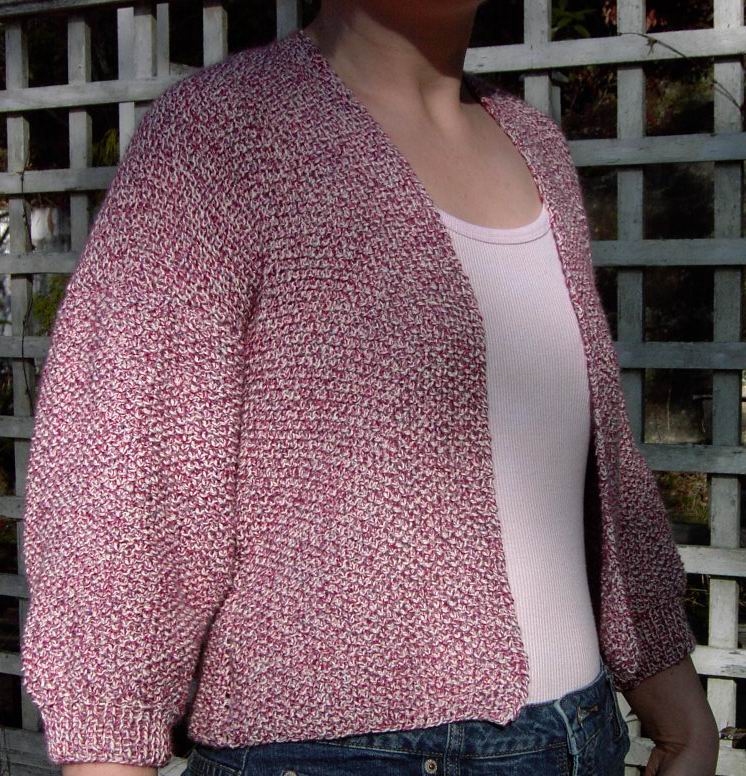
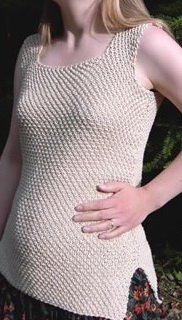
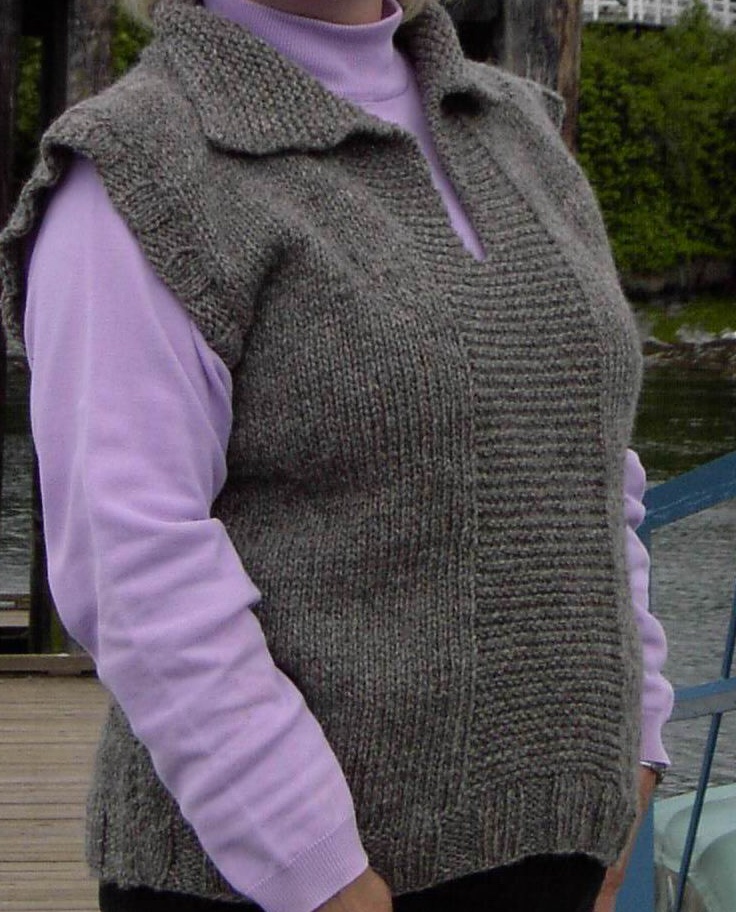
I await "the" issue of Knit Together that features "Hey Blondie". "Hey Blondie" is a tribute to the iconic blonde movie stars of the 1950s and 60s. I used Kraemer Yarns "Little Lehigh" in the design. I highly recommend this cotton/acrylic blend.
A couple of days (or was it weeks) ago my muse whispered in my ear. It seems she had this great idea for a children's book. The book married a picture book with a craft book. I finished my submission yesterday. I slipped it in the mail and it was gone. What will the publisher say? I must wait six months for the judgment.

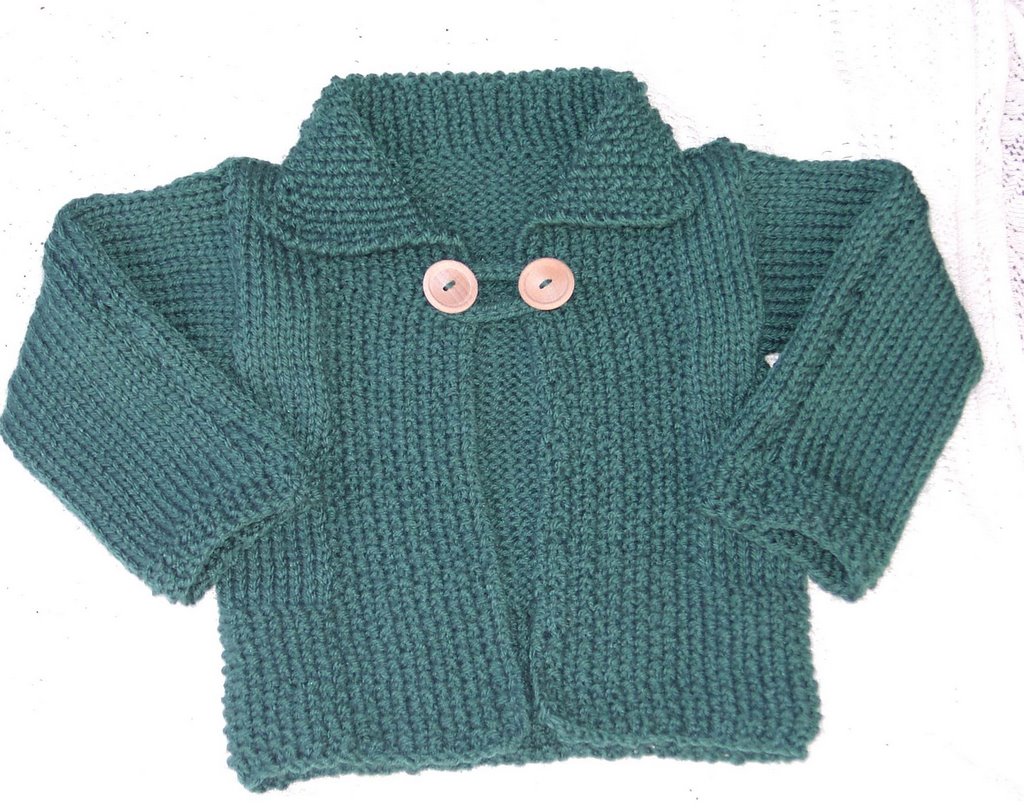
Many people have been awaiting my first pattern book. Well, I have decided that they shall wait no longer. I am currently working on such a book. More on this in future posts.

Thursday, March 30, 2006

Today I grief. I have lost not one friend but scores of them.
Allow me to explain: I crave knitting books. Now I knit my own creations so it is not the pattern books I crave. No, instead it is knit lit. I thoroughly enjoy stories about knitting.
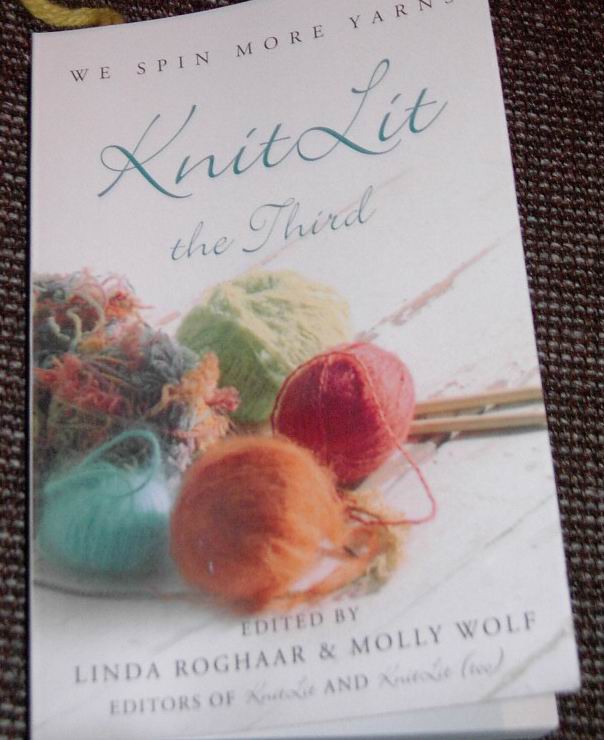
Sadly, Mayne Island (population 1,000) does not have a bookstore dedicated to knitlit. So when I hunt down a "good" knitting book I cherish it like fine wine. When shall I open it? How fast shall I drink in the prose? I know this experience is finite. I savour each word. For a couple of months now, I have been tasting the sweet stories contained in Knit Lit III.
Two stories stand out for me: the Preface "Linda's story" is a tale of two friends and their mutual love for knitting.
'The Cardigan', written by Harry Kelley, is a poem written by an uncle to accompany his gift to his niece.
Both are finely crafted. One left me in tears the other in laughter.
I would have loved to sustain this relationship with my friends for years. Unfortunately, this was not to be. Yesterday I finished the book.
So now I am alone. Separated from my friends. Thank heavens for Amazon.com
Your suggestions for fine Knit Lit are greatly appreciated.

Wednesday, March 29, 2006

Introducing Aran

Due to knitting's vast history there are many legends surrounding it. Yet another is the origin of the Aran sweater.

Aran sweaters are identified by their highly decorative stitch pattern. There is a dispute as to when these sweaters were designed and the reason for the intricate pattern.

One theory has it that the sweater was designed during the 1920s. The reason for the intricate stitch pattern was simply pride. You see the sweater was presented to boys upon their partaking of their first Holy Communion. Grandma was thrilled to invest time and effort to celebrate such an important event.

The second theory maintains that the design is much older: dating back to the Middle Ages. The stitches are said to be helpful in identifying drowned bodies. Whether it be the fishing village depicted by the horizontal patterns of the English and east coast Scottish knitters. Or family as depicted by the vertical pattern of the Irish and west coast Scottish knitters. The knitters ensured that the bodies could be claimed.

It is any knitter's guess as to which legend is factual.

Every time we take a stitch we are contributing to the history of our craft.

More information on this topic:
http://www.clanarans.com/ca/catalog/
http://www.galwayl.ie/faq/sweater.htm
http://www.irishcultureandcustoms.com/AEmblem/Sweaters.html
http://www.sweaters.org/history.html


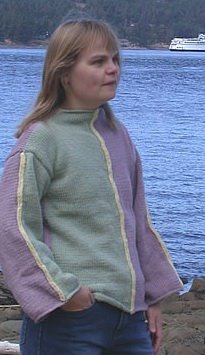
I was heard "aran" described as painting a picture with stitches. The picture, although clearly not aran, is my attempt at painting with stitches.


Tuesday, March 28, 2006

Ribbing

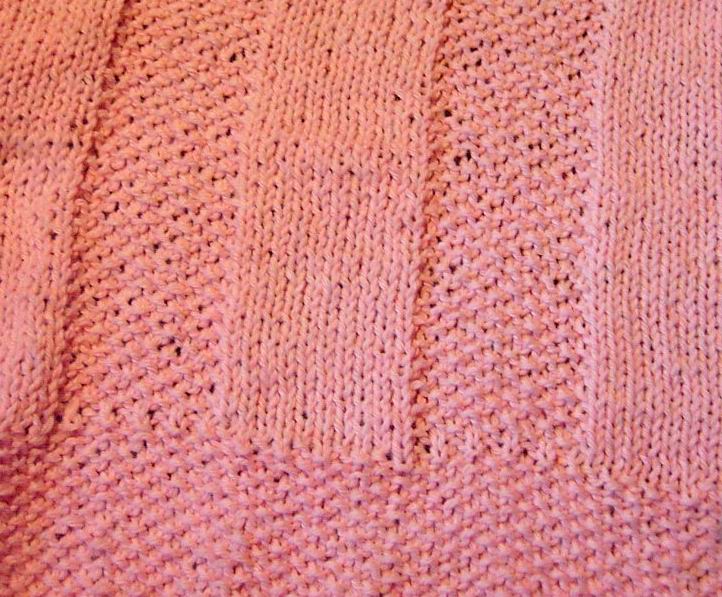
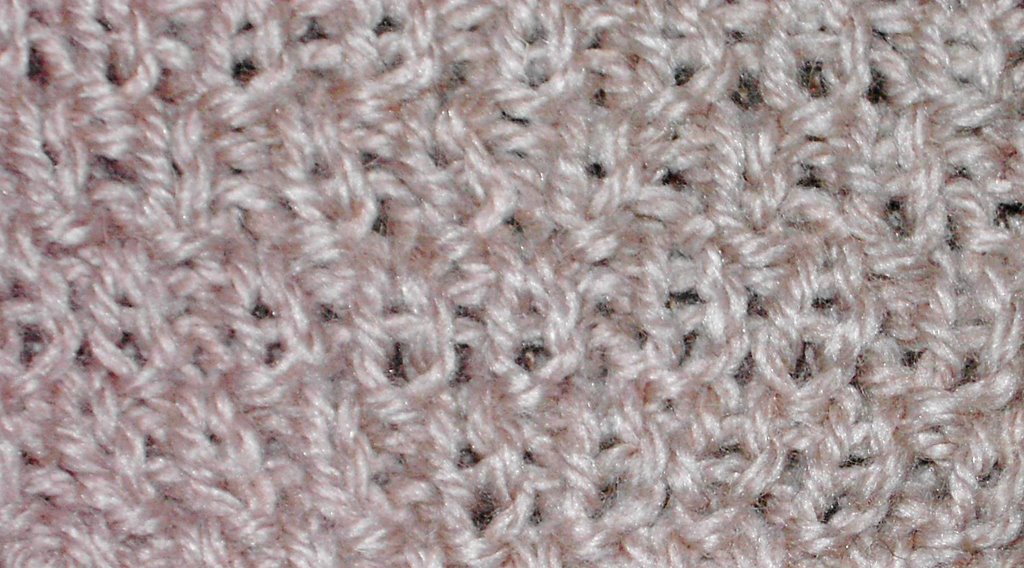
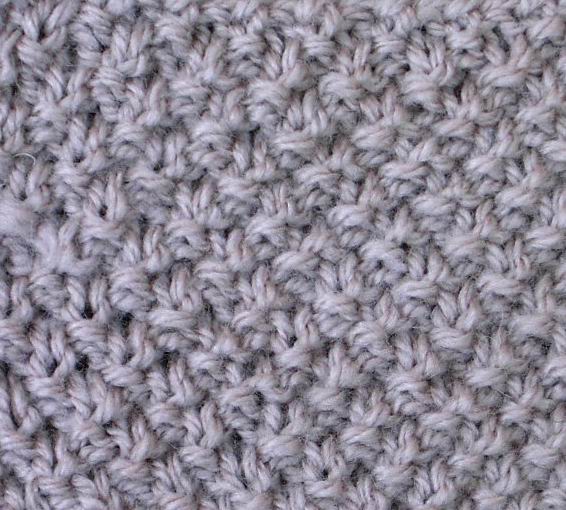
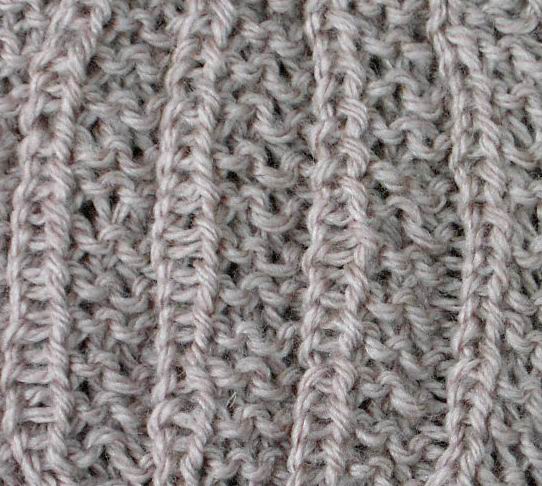
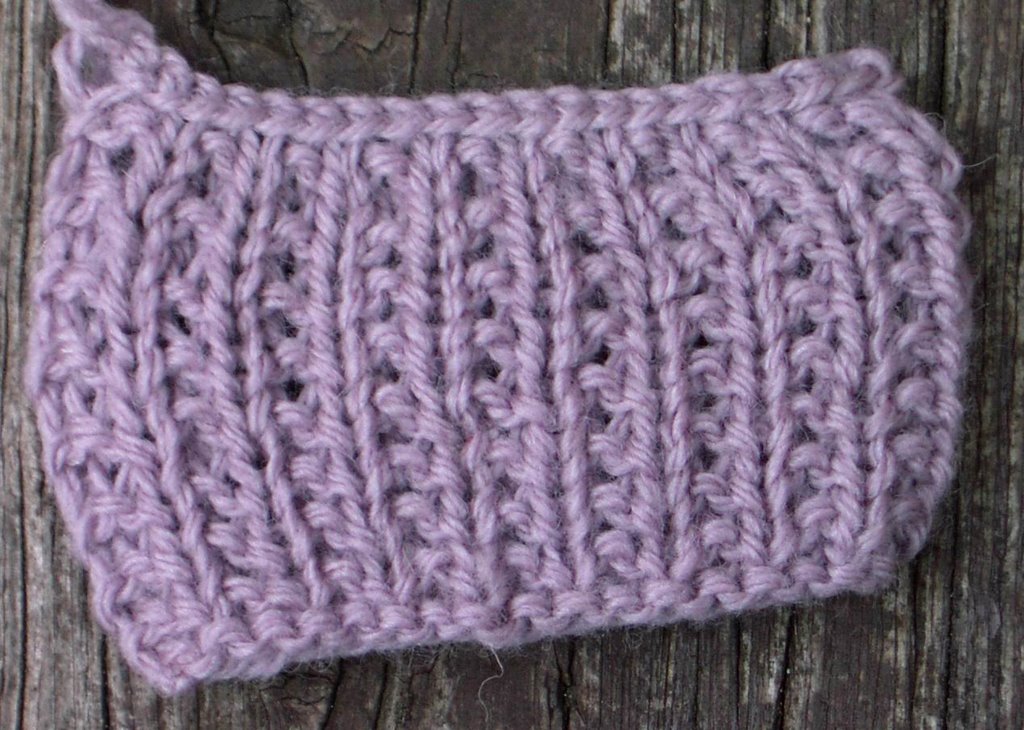
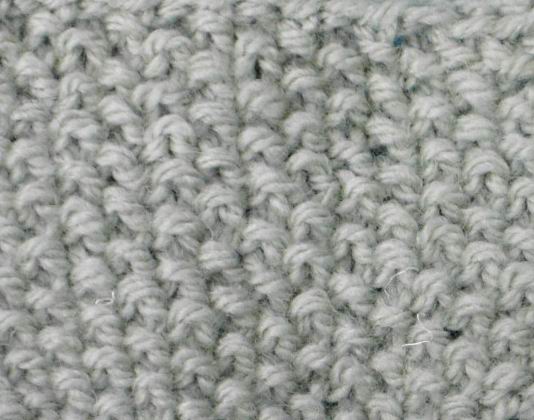
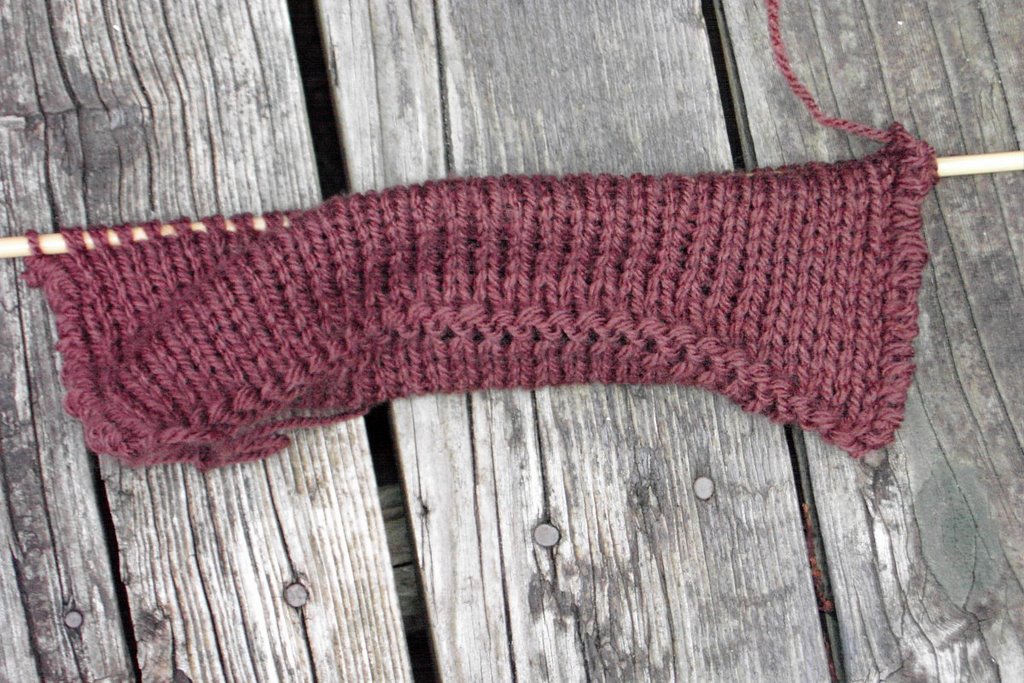
What if you scattered seed stitch over an odd number of rows?
You would produce an "interrupted rib"
Please click on the pictures to see the detail.
The following stitch pattern:
row 1 to 3: *knit one, purl one - repeat from * to end of row.
row 4: *purl one, knit one - repeat from * to end of row.
repeat rows 1 to 4 for pattern
produces this:
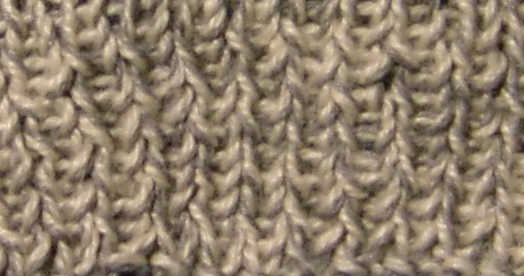
The following stitch pattern:
rows 1 to 3: *knit one, purl one - repeat from * to end of row.
rows 4 to 6: *purl one, knit one - repeat from * to end of row.
repeat rows 1 to 6 for pattern.
produces this:

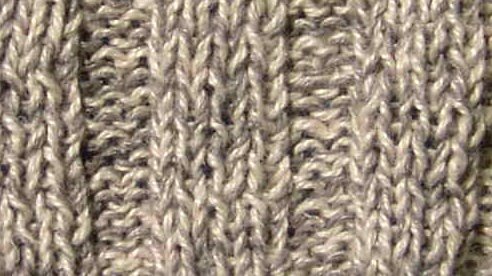
Looking for something more "traditional"?

Try: row 1: knit one, purl one - repeat from * to end of row.

repeat row for pattern.

The 1 x 1 rib stitch

I used this "traditional" 1 x 1 rib stitch to design: Pieces. 'Pieces' was featured in the Canadian guild of knitters' quarterly publication: Knit Together. 'Pieces', the hand knitting pattern, will soon be available for sale through www.oknitting.com
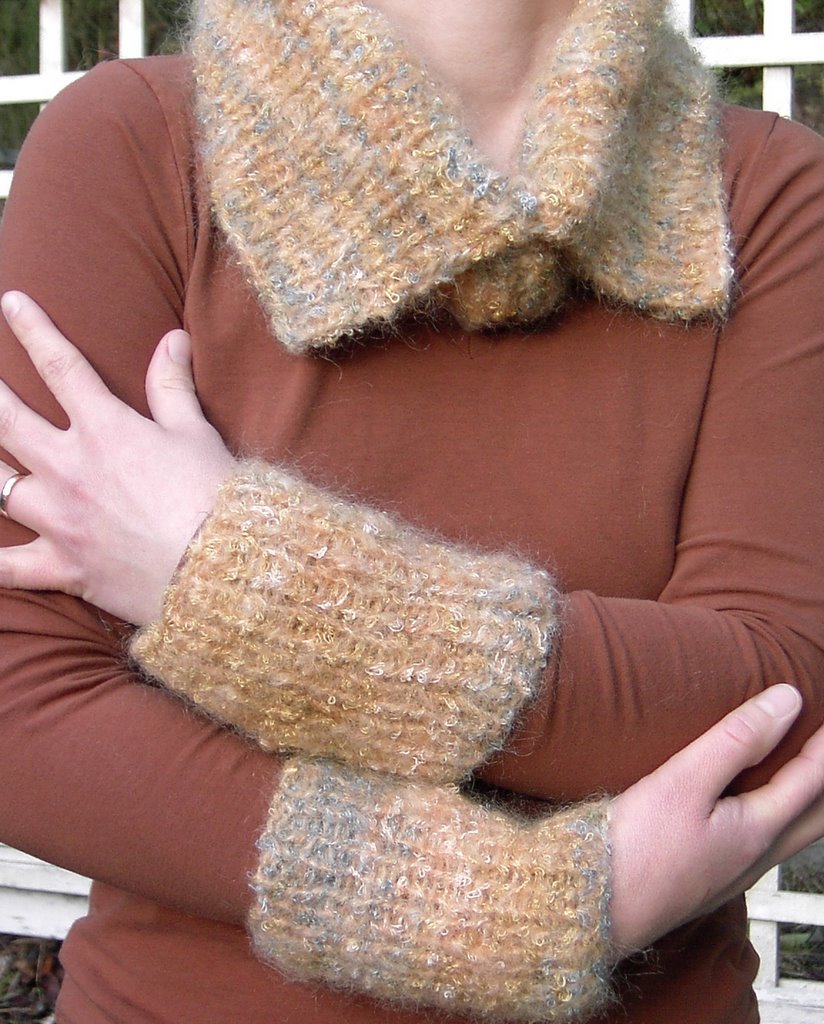
Traditionally 1 x 1 rib stitch has been used for collar and cuffs. I designed "Collar and Cuffs" to jazz any plain top or dress. Collar and Cuff will soon be available as well.
Another traditional rib stitch pattern is 4 x 4 rib

Try: row one: knit four, purl four - repeat from * to end of row.

repeat row for pattern.

4 x 4 rib gives your work an "accordion" effect. Meaning that left unblocked your work will pull together when relaxed. It will stretch when pulled.
Deep Blue features 4 x 4 rib stitch on the cuffs, neck, and waist. The scarf is also worked in 4 x 4 rib. Unblocked the scarf is skinny. Blocked it is wider.
September's Promise uses 4 x 4 rib on the armbands and waist.

How many more of my designs use 4 x 4 rib stitch? Visit www.oknitting.com to discover more.

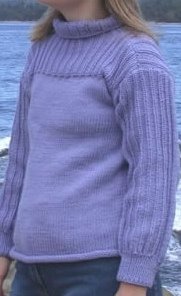
Sailor's Delight for this sweater I "invented" a new rib stitch. I will work a sample and post it tomorrow. ...stay logged on.

Next post: introducing Aran.

Monday, March 27, 2006

Stitch pattern: "inventing" your own

Today I experimented with the number of rows in the stitch pattern.
I tried:
Cast on twenty stitches.
row 1 & 2: *knit one, purl one - repeat from * to end of row.
row 2 & 3: *purl one, knit one - repeat from * to end of row.
Repeat rows 1 to 4 for pattern.

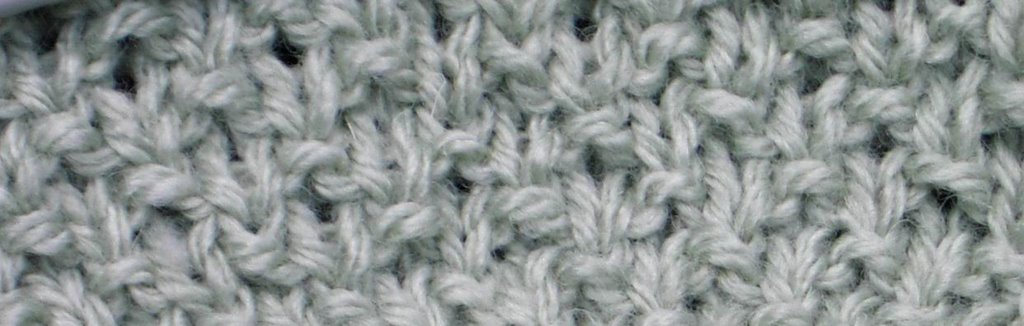
This is two sided stitch pattern. By that I mean, it looks the same on both sides. Hey, does this stitch pattern look familiar? Yup, it is the moss stitch. ...this happens sometimes.


Homework: what if you used an odd number of rows.

Next post: Ribbing

Sunday, March 26, 2006

Stitch pattern: "inventing your own stitches": oddly

Yesterday we experimented with the number of stitches in the stitch pattern. Today tip:
Experiment with the number of stitches ...but choose an odd number.
Try:
Cast on twenty stitches.
row 1: *knit one, purl three-repeat from * to end of row.
Repeat row for pattern.
The result:
a stitch pattern that is the same one both sides.
Also yesterday I suggested that you try the
row 1: *knit two, purl two - repeat from * to end of row.
row 2: *purl two, knit two - repeat from * to end of row.
repeat rows 1 to 2 for pattern.

Next post: let's continue with our experimentation.

Saturday, March 25, 2006

part II Stitch patterns: seeding your own stitches


Isn't it fun "inventing". Today I "invented" a two side pattern. Here's what I did:
I experimented with the number of stitches in the stitch pattern. "Normally" seed stitch is worked in multiplies of two: one knit and one purl. Well, I worked "my" pattern in multiplies of four:
Row 1: *knit two, purl two- repeat from * to end of row.
Row 2: *purl two, knit two-repeat from * to end of row.
Repeat rows 1 and 2 for pattern.
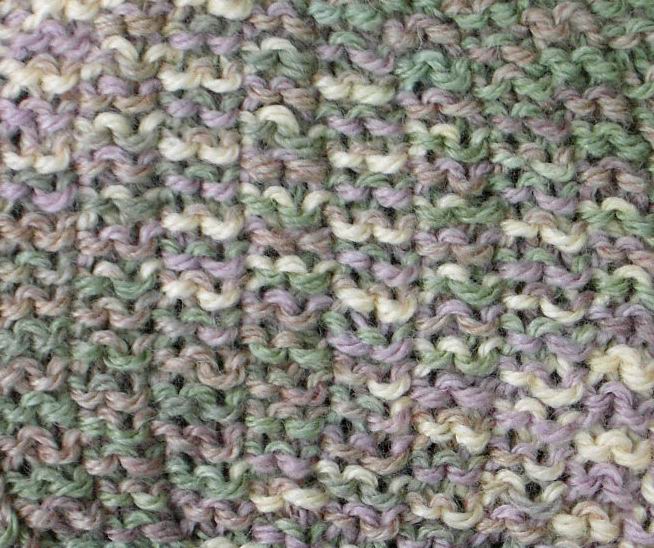
Homework: try this stitch pattern in variegated yarn.

Yesterday I suggested suggested that we:

row 1: knit - to end of row.

row 2: *purl one, knit one - repeat from * to end of row.

Repeat rows 1 to 2 for pattern.

This is what I got.


MILT
"How would you capture the essence of your life for the stage?"
Two young Mayne Island writers accomplish this feat with naked bravery. A monologue captures the life of a cancer survivor. A one-man one-act play is a portrait of life with mental illness. Last night they received a well-deserved standing ovation. Doors open at 7:30pm.

Friday, March 24, 2006

Stitch pattern: seeding your own stitches

"Inventing" stitch patterns is not only enjoyable but is also a great way of using up odds and ends of yarn. I keep a small bag of yarn ball ends expressly for this purpose. ...so without further delay let us play...
The rules (feel free to break them)
I like stitch pattern that are no longer than four rows.
..oh, I thought there more rules... guess not.
Tip
Combine two stitch patterns: such as purl and seed stitch.
Rows:
row 1: *purl one, knit one - continue from * to end of row.
row 2: purl - to end of row.
row 3: *knit one, purl one - continue from * to end of row.
row 4: purl - to end of row.
Repeat rows 1 to 4 for pattern.
Pretty, eh? Do you want to play some more? Why not try...
row 1: knit - to end of row.
row 2: *purl one, knit one - continue from * to end of row.
Repeat rows 1 and 2 for pattern.
I'll show you mine if you show me yours. ...tomorrow. Plus more ways to play.

What do I do besides knit? Well, yesterday, today, and tomorrow I am "working door" or "doing house" which ever expression you like to use. Mayne Island Little Theatre is currently staging two one-act plays. ...more on this tomorrow.

Thursday, March 23, 2006

Stitch pattern: seed and moss stitch

It seems to be a re-occurring theme in this series of posts that I forget one design. Yesterday's post on Stockinette stitch was no different. I forgot... Ferry traffic
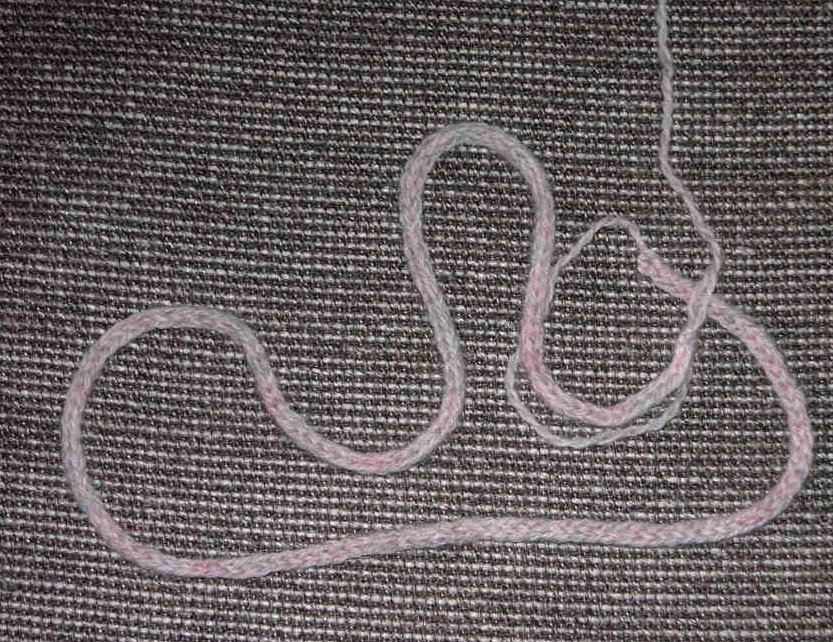
I combined I-cord with Stockinette stitch in this tribute to the ferry.
Funny thing on Mayne Island you can tell when the ferry is in: by the long stream of traffic.
Sadly, I must report that the sinking of the Queen of the North did result in two lives lost. My thoughts and prayers are with the families.

Seed Stitch

There seems to be some confusion (or differing) over the terms "seed stitch" and "moss stitch". Some seem to think that it is the same stitch only different terminology is used. As indicated by this site: http://www.clicketyknits.com/htm/all_about_knitting/terminology.htm

This site states that what is known as "seed stitch" in the United States is referred to as "moss stitch" in the United Kingdom.

So I referred to a United Kingdom web site and a United States book for the stitch pattern. Here is what I found in each source:

Row 1: knit 1, purl 1; repeat

Row 2: purl 1, knit 1; repeat

Repeat rows 1 and 2 for pattern.

Could it possibly be that we are not as different as we think we are?

Seed stitch

This stitch pattern is my muse: as revealed by the long list of designs which incorporate it.
Puddin' Pie: uses seed stitch on the collar, cuffs, waist and pocket. Even the cute finger puppet is worked in seed stitch.
Pets: uses seed stitch to "paint" on Stockinette stitch. More on this painting with stitches in future posts.
Islandia: seed stitch gives this garment a rustic look.
When the meadowlark sings: I framed the stockinette stitch with seed stitch.
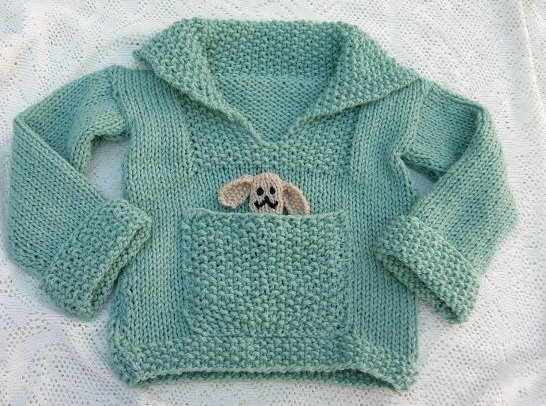
Bunny Hug: I worked the hood, cuffs, waist and pocket in seed stitch. The body is done in Stockinette stitch.
Too Cool! Once again I framed Stockinette stitch with seed stitch. I enjoy wearing this top over a t.
Seaside stroll: unique use of seed stitch.
Island Dreams: finally I feasted on seed stitch: arms and body worked in this beautiful stitch pattern.
Summer's Sunset: a summer cardigan designed to showcase my muse: seed stitch. This new pattern will be available soon.
Cuddling: a uniquely constructed children's sweater with seed stitch detailing. This new pattern will be available soon.

See I wasn't kidding about my passion for seed stitch. Why do I like it so much: it lays flat, it does not stretch, it does not curl. It is a beautiful combination of knit and purl.

Moss stitch

Talking about beautiful stitches, this is another one.

I may not enough moss in my yard but I love it in my knitting.

Once again two separate sources (UK and US) verified that moss stitch is:

Row 1 and 2: knit one, purl one; repeat.

Row 3 and 4: purl one, knit one; repeat

Repeat rows 1 to 4 for pattern.


Seeded stitches top: Inspired by the moss stitch I began to invent my own stitch patterns. In this pattern I teach you how to join in this fun. ...but I can't stand to keep secrets to myself so the topic of the next post will be how to use the seed stitch to invent your own stitch pattern.
Lasting Romance: I clearly have a lasting romance not only with knitting but also with seed stitch and its many relations.

Wednesday, March 22, 2006

Stitch pattern: stockinette stitch

Today I am feeling very much an islander. As an islanders we rely heavily on BC ferries. It is one of our only means of vacating our beautiful island. Well, last night the "Queen of the North" sank. "S-A-N-K" that word gains new meaning when you live on an island. The "Queen of the North" sails to the Queen Charlotte islands. It has a capacity of 700 passengers. If it was not for the BC ferries crew and the residence of Hartley Bay this story would have not have had this happy ending: all survived and are safe.

Stockinette stitch

"Rolling, rolling, rolling keep that knitting rolling...Stocking stitch"

My dictionary defines "stockinette" as 'an elastic knitted textile fabric'.

The stitch pattern goes by many names jersey, stocking stitch, stockinet stitch, and what I know it as "Stockinette stitch". I have had other knitters correct me saying, "Oh, you mean stocking stitch". Actually, all names are correct.

The Knitting Dictionary states that the jersey stitch "gets its name from the isle of Jersey where, for a very long time, fishermen's wives have knitted sweaters in this stitch for their husbands."

Pam Allen recounts the history of the stitch as dating back to the 1500's and the popularity of knitted stockings in England.

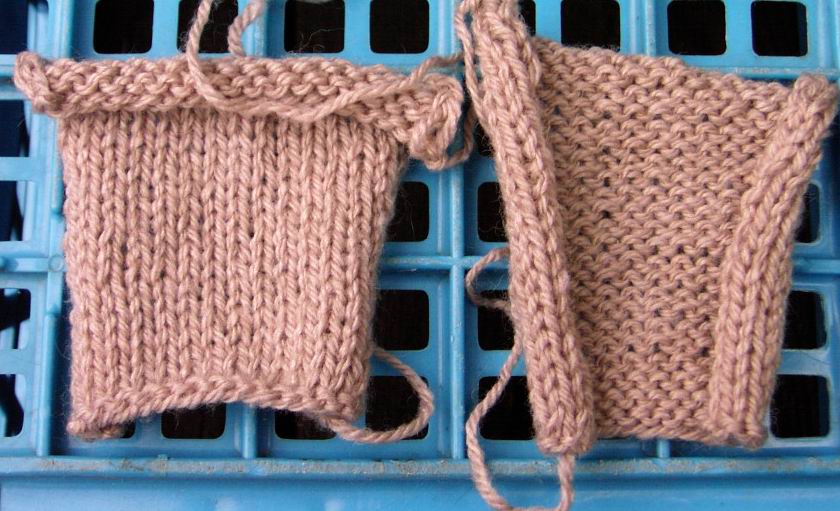
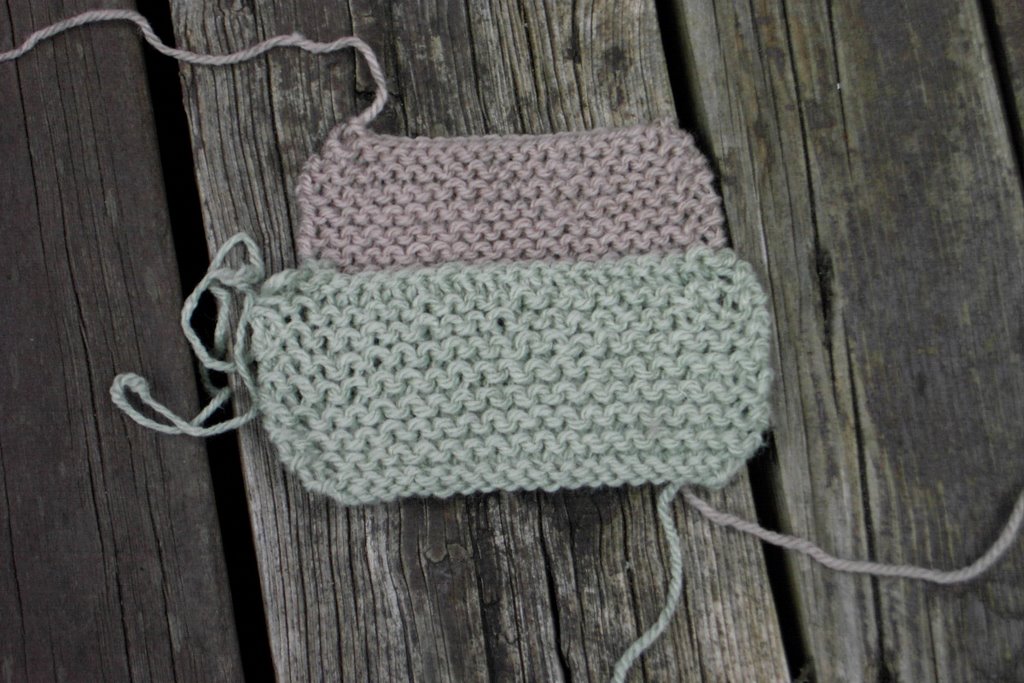
This stitch pattern has a "right" and "wrong" side. The "right" side is called the stockinette stitch and is achieved by the knit stitch. In the above picture, the "right" side is on the left side. Notice how smooth it is.
The stitch pattern is written like this:
Row 1: knit - to end of row.
Row 2: purl - to end of row.
Repeat rows 1 and 2 for pattern.

The "wrong" side is called the reversed stockinette stitch and is achieved by the purl stitch. In the above picture, the "wrong" side is on the right side. Notice the bumps. Count these bumps to determine how many rows you have.
The stitch pattern is written like this:
Row 1: purl - to end of row.
Row 2: knit - to end of row.
Repeat rows 1 and 2 for pattern.

The correct abbreviation for Stockinette stitch is "STst". It is the only stitch pattern that uses capital letters. Why? I am not sure.

In fact, there are many things about this stitch pattern which leaves me scratching my head. Why if both the purl and knit samples lay flat does Stockinette stitch curl? Why if both the purl and knit samples look the same when worked separately do the stitches look different when worked in alternative rows? why...why...why...why

Could the reason Stockinette stitch curls be revealed in the above picture. I casted on twenty stitches for both samples. And yet, the green purl sample is wider than the tan knit sample. If one stitch is looser than the other it would make sense that it would curl towards the tighter stitch. Yet the sides curl towards the purl stitch. Whereas the top and bottom curls towards the knit stitch.

Okay, so I don't know why it happens but I do know a way to fix it. You see

you tame the curl by adding a broader of garter stitch. As an alternative to the garter stitch boarder you work the boarder in seed or moss stitch. The topic of the next post will be the seed and moss stitch.

Other ways to tame the curl are to sew on a boarder, pick up the edge stitches and work a boarder from them or attempt to tame the curl by blocking your project. Of all these solutions, the best is the first I have described. ...at least in my opinion.

Olavia's hand knitting patterns which incorporate the Stockinette stitch.

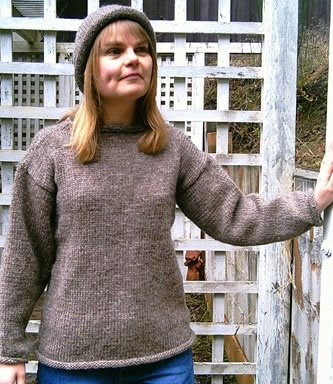
"Fair Wind" uses the Stockinette stitch curl to its advantage. The sweater's cuffs, waist and neck curl. The hat's brim also has an attractive curl.
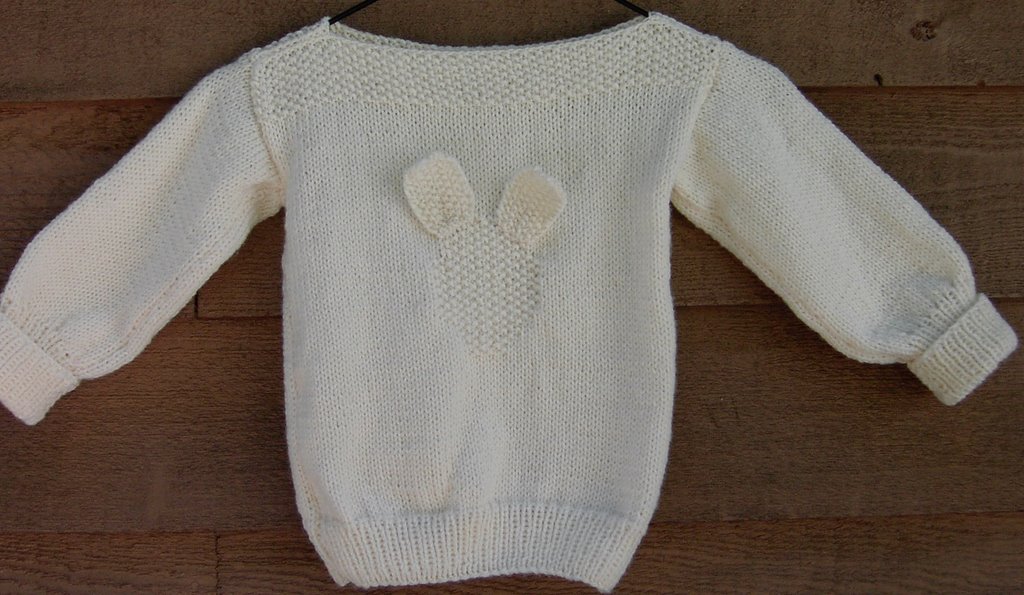
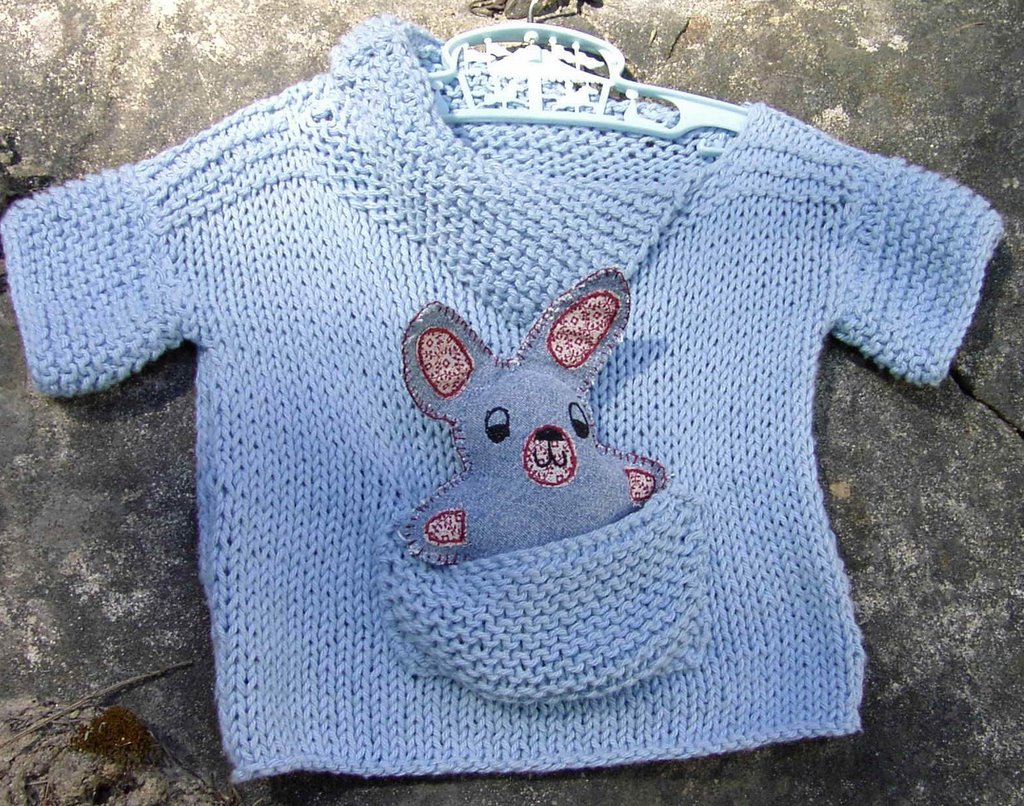
"Honey Bunny" Did you guess correctly? This was the design I forgot in yesterday's post. The child's sweater features garter stitch on the neck, cuffs, pocket, and shoulders. The body is worked in Stockinette stitch. I am often asked if "honey bunny" can be worked on circular needles. The answer is yes. What you do is add the stitches required for the front and back together and cast on this number of stitches. You would then knit until you reach the underarms of the sweater. I do not include instructions for circular needles in the pattern. I have been toying with the idea of including them. Finally, I have decided against it. Why? My patterns are written for the advanced beginner and beginner. (although many knitters of intermediate and advanced level skill also enjoy knitting them) This skill level does not use circular needles. If you are frustrated by my response please send me an email: leanne@oknitting.com Who knows you may be able to change my mind.

No one will deny that it would be nice to sail through life in garter stitch...but then we would miss the challenge of the purl stitch.

Tuesday, March 21, 2006

Stitch pattern: the garter stitch

Garter stitch has introduced many to knitting. It is one of (if not the) easiest stitch pattern to work: simply knit all rows. If a firmer fabric is required simply knit into the back of each stitch.
In her book Knitting for Dummies Pam Allen traces the history of the garter stitch back the 1500s "when hand-knit stockings were a major industry in England." Garter stitch was worked on the top of the stocking "where it needed to expand for the thigh."
Notice that garter stitch lays nicely flat. It also appears the same on both sides making it a wise choice for blankets, scarves and for other items were both sides are visible.
To count rows, count each ridge twice.
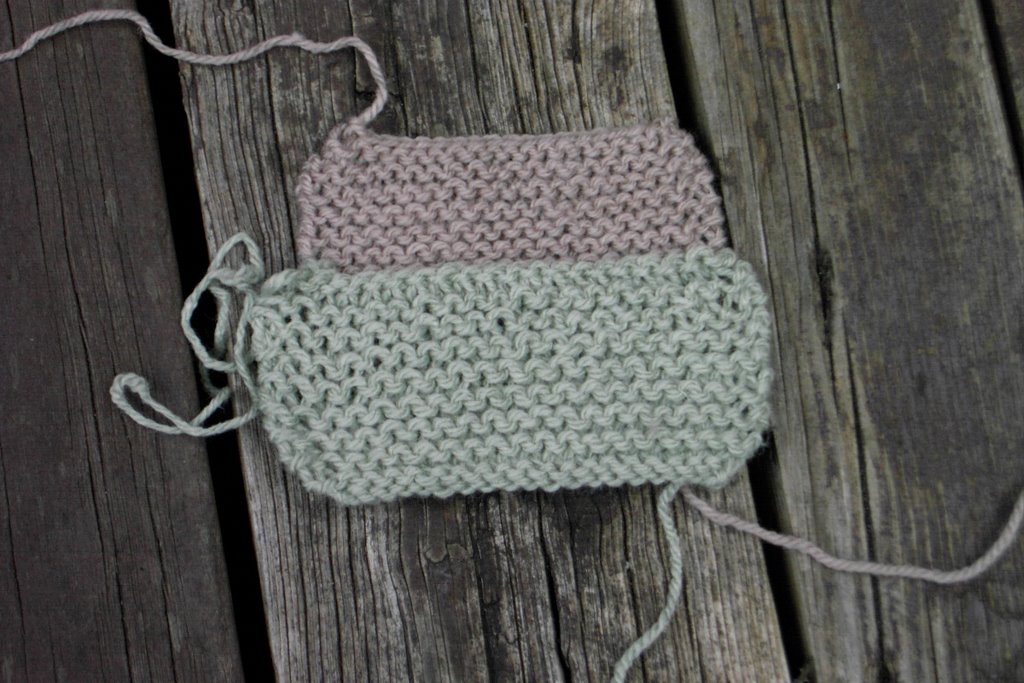
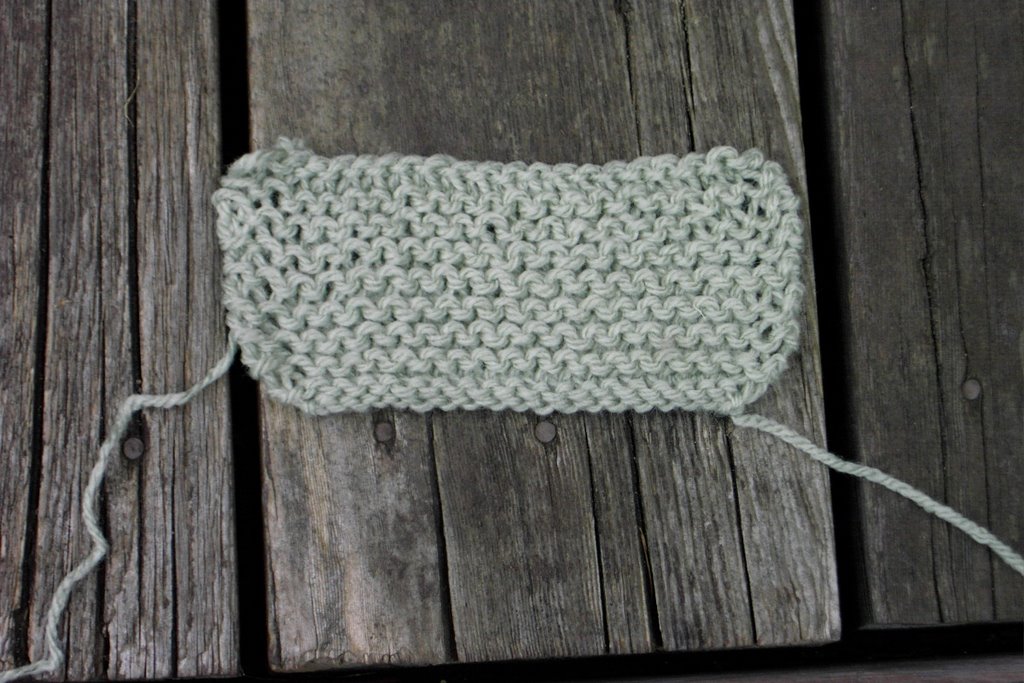
Take a careful look at the samples above. Where they both worked in garter stitch? Seems like a lam question. Clearly the answer is yes. ...and yet

is not garter stitch. To make the green sample, I worked each stitch in purl. There is an advantage to doing so. Much like working into the back of each stitch, purling each stitch results in firmer fabric.
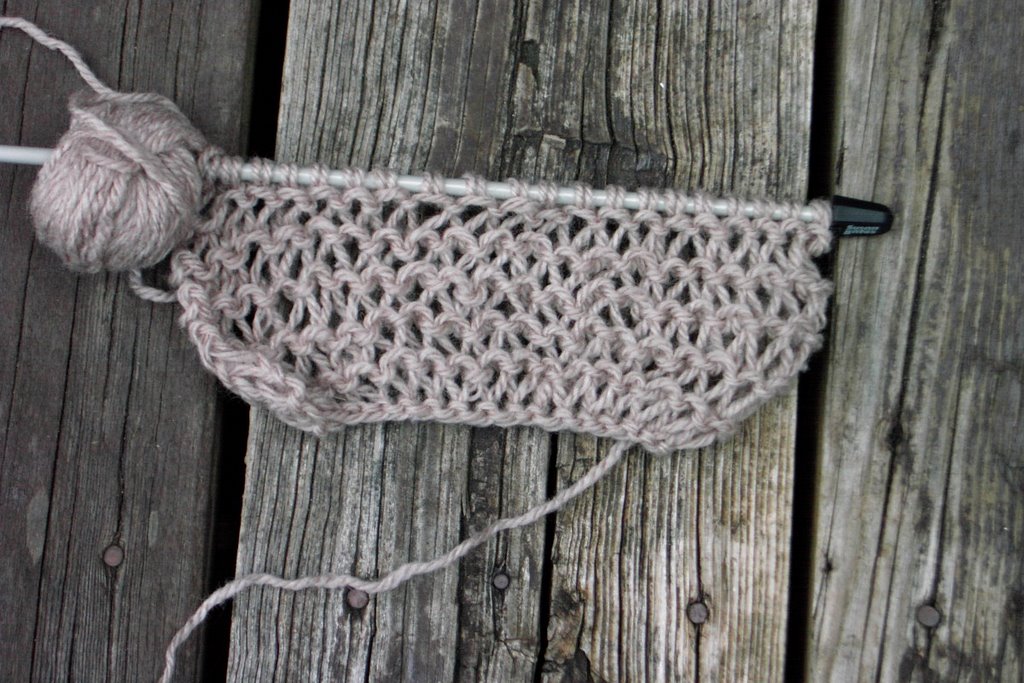
This pretty lace pattern is so easy to knit. Click on the picture to enlarge.

What you do is this: Normally to knit you wind the yarn around once to form a new stitch. For the lace pattern you wind the yarn twice. Next row you treat each double wrapped stitch as one stitch. (Clear as mud? Email me and I will attempt to clarify.) This results in the pretty lace pattern.

In previous posts I have introduced you to double knitting. This is simply a combination of garter stitch and slipped stitches.
I have also introduced I-cord. I-cord is simply garter stitch done on double pointed needles. There is a trick, however. To learn the trick, please read the post on "making I-cord".

I have incorporated garter stitch in these designs.

"September's Promise" features a figure flattering centre panel. As well the collar is worked in garter stitch. The advantage of working the collar is that is looks the same on both sides and lays flat.
"Safe Harbour" Both the sweater and scarf feature garter stitch. For best results, work the sweater in a non-stretch yarn such as wool.

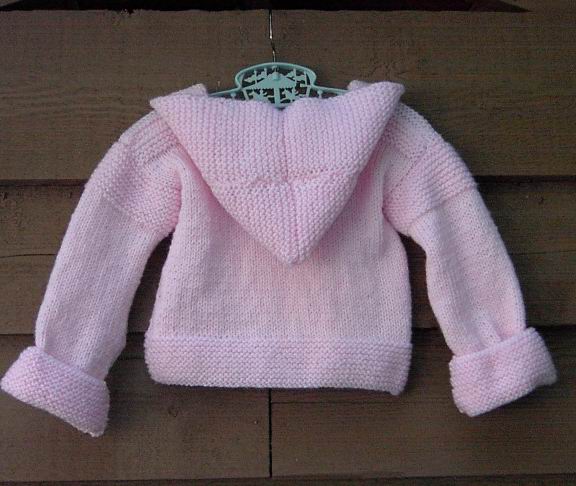
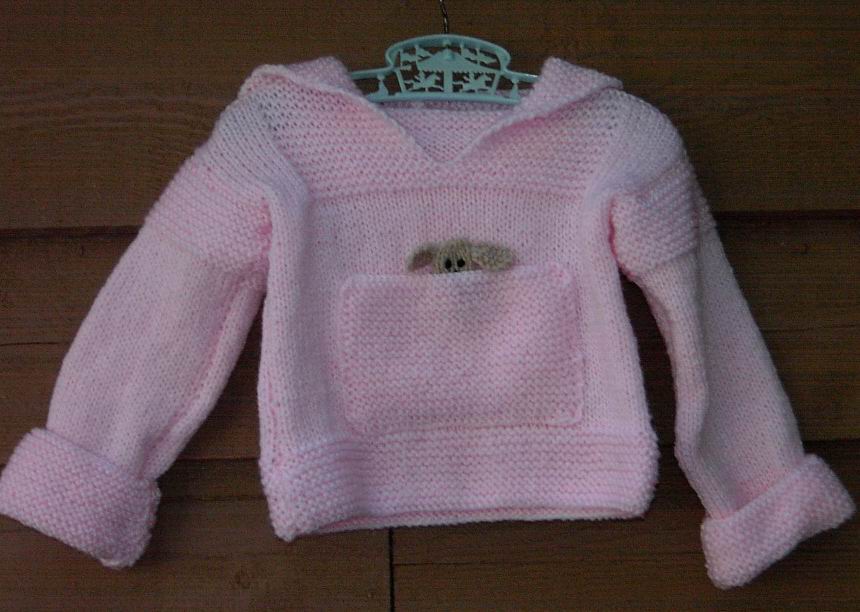
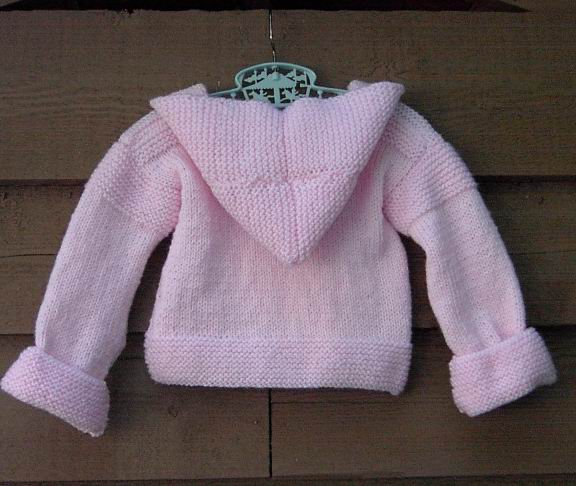
"Muffin" This adorable baby hoodie features garter stitch on the hood, waist, pocket and cuffs.

Wouldn't you know it I forgot one of my patterns which features garter stitch. Can you guess which one? Thankfully, the other stitch pattern used is Stockinette stitch which is the topic of the next post. So log in tomorrow to see if you guessed correctly.


To learn how-to work garter stitch, visit this helpful site: http://www.knittinghelp.com/knitting/basic_techniques/misc.php

Monday, March 20, 2006

Stitch patterns: an overview

Spring - spring - spring - spring - spring - spring - spring - spring - spring
Spring is springing out all over on the beautiful isle of Mayne.
Happy spring!

In my small knitting library, books on stitch patterns seriously out number all other topics. These books are relatively new acquisitions. Some were bought most were acquired: hand-me-downs or gifts. I will be using these books to discuss our next topic - Stitch patterns.
The following is a brief overview:
-An introduction of stitch patterns commonly used in Olavia's hand knitting patterns.
-The characteristics of stitch patterns (i.e. stockinette stitch and garter stitch)
-How to create your own stitch patterns.
-Where to find new stitch patterns.
-The history of stitch patterns (i.e. knitting stockings and Aran)
I hope you find these posts useful. If you would like to help me feed the blog, please email: leanne@oknitting.com Your emails are most welcome.

A brief weather report: Today's high is 15 C. It is sunny and definitely feels like spring.

Next post: garter stitch

Sunday, March 19, 2006

Yarn casted

As you may recall from my critic of the double cast on, one of the reasons I didn't like this method was because the length of the tail limited your number of stitches. Well, here is yet another reason that I am so thankful we are not all the same. Where one sees problems - another sees solutions. Allow me to explain: you see I receive Knit Net's (www.knitnet.com) weekly tips, tricks, and trade secrets email. In their last email Stephanie Young shared this gem. You see Stephanie suggested that you use two balls of yarn. So I did that. The "tail" is from the green ball. The "working yarn" is from the yellow ball. Untold possibilities. I am so happy. All I can say is thank you, thank you, thank you, Stephanie. If you know Stephanie please thank her in person for me.
So ends our discussion of casting on...

What am I working on?

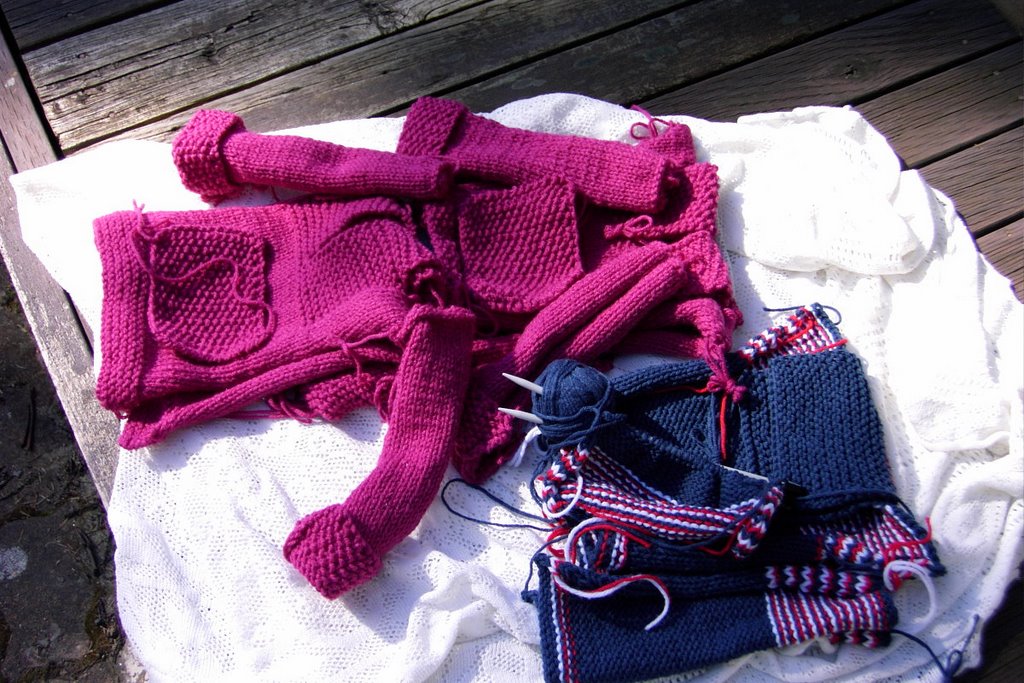
Well, Salt Spring Island (our big island sister) has a wonderful shop, ArtCraft, which markets artisans and artists work. They open in May and close in September. As May quickly approaches, my needles are merrily clicking away on baby sweaters. These baby sweaters will be for sale at ArtCraft. How do you attach a motor to a knitting needle?

Of course as usual I have other projects on the go as well.

Next post: we begin discussing stitch patterns.

Thursday, March 16, 2006

Good idea

"Happy St. Patrick's Day!"

If I knew where good ideas came from I would go there more often. Shucks, I would pitch my tent. They would have to evict me. We tend to glamourize the place. It must be a warm tropical beach, we reason. Unfortunately, I have recently awaken to the harsh reality of where my muse dwells. It's not pretty, my friends. Not at all. I'm afraid my muse only swims in tropical waters she does not live or work there. She rolls up her sleeves and gets to work in the most morose places. For some reason, she enjoys visiting me when I am cooking, cleaning, and performing other household tasks. She takes great pleasure in seeing me up to my ears in domesticity. She is ...SADISTIC!

Double knit cast on

I am afraid that my head feels like it is in a vice. So if I don't make sense you'll understand why. Please email leanne@oknitting.com for explanations.
This technique works best working with bulky weight yarn.

Begin by casting on the desired number of stitches.
Begin to divide the stitches between two needles.
Knit the stitches onto the first needle.
Slip the stitches onto the second needle.

Or you may use two needles and a stitch holder.

Now, one side at a time, knit the stitches. Here are some quotes from some emails I have received on this topic:

'when [would] a knitter...use the Double Cast on Method.' -Jean

This method would be used when you wish to knit a project that has two sides: pockets or shoulders. I used this method when I designed the top down version of "When the Meadowlark sings". I am in the process of developing other patterns that utilize this technique. Looking for a kit in the fall.

This is "When the Meadowlark sings"

Sandra wrote: 'Do you use 2 balls of yarn?'

'Thank you for the email. ...The answer is yes and no.

No: If you slip the slipped stitches onto a stitch holder you need only to use one ball of yarn. Following this procedure will allow you to work one end at a time.

Yes: If, instead, you slip the slipped stitches onto a knitting needle then you will be able to use two balls of yarn. Following this procedure will allow you to work two ends alternatively.'

Wednesday, March 15, 2006

circular knitting on two straight needles

Both "circular knitting on two straight needles" and the "double knit cast on" grew out of the double knit technique. Thus I will begin by describing the double knit technique. I will then go on to describe circular knitting on two straight needles. Tomorrow's post will describe the double knit cast on technique. If you feel I could describe a step clearer or have any other concerns, queries or suggestions please email me: leanne@oknitting.com I appreciate your assistance.
Step 1:
Begin by casting on. You may use your favourite cast on technique. I like double cast on.

Step 2:

Proceed by working in this pattern:

Row 1: knit; *slip stitch as if to purl, knit - repeat from * to last stitch, knit one

Row 2: knit; *knit, slip stitch as if to purl - repeat from * to last stitch, knit one
Repeat rows 1 and 2.

You will notice that your work has two sides. Pulling the sides out you will notice a "seam" that runs down the bottom centre of your work.
Employing the double knit technique I designed both the Summer "Daze" Purse
and these Oven Mitts

Circular Knitting on two straight needles

Begin with step 1 and proceed to step 2: as described above.

Step 3:

Using three needles, place "slip stitch" stitches on one needle and "knit" on another needle. (This method is seen in the picture above.) You may then continue to work these "two sides" separately. If you wish to work the "sides" at the same time two yarn balls are required. You would do this by working all the stitches from one side and drop that yarn. Then work all the stitches from the other side and drop that yarn. Proceed in this manner for the required length. If you prefer to work one side at a time you may use one yarn ball. You must work one side to its required length then cast off. You then proceed to work the other side.

The picture above reveals the result you will obtain. Step 3 was worked in 1 x 1 rib stitch.

1 x 1 rib stitch

Row 1: knit one, purl one - continue to end of row.

Repeat row 1 for pattern.

I designed this water bottle holder using "circular knitting on two straight needles". The strap is I-cord.

Copyright by Leanne Dyck on March 15, 2006

Reproduction of this article in whole or in part is strictly prohibited. Web site linking to this page is encouraged.

Next post: the double knit cast on

Tuesday, March 14, 2006

That's it I'm through

I am going to stick to my knitting.
I have tried to be a modern gal.
First my electric bike died.
Then I can't post a pic on my blog.
I am going to go and console myself with baby knitting.
I will try again tomorrow.
Hopefully the gods will smile upon me.
Good thoughts are most welcome.

Next post: Circular knitting on two straight needles which will lead into the Double knit cast on technique.

Monday, March 13, 2006

Blind casting on

Due to do an unforeseen circumstance today's post: Double knit cast on: the new technique is not available. In it's place I present: Blind casting on. I hope to be able to present Double knit cast on: the new technique tomorrow. I apologize.

Blind casting on...
Here are some reasons to cast on besides knitting a project:
-to practice casting on.
-practice a new method of casting on.
-practice a new stitch pattern.
-pure pleasure - you don't need to have a goal to knit.

Sunday, March 12, 2006

Castin' on ain't hard to do

(Tune: Breaking up is hard to do by the Carpenters)

"They say that rippin' out
is hard to do
Now I know, I know
That's it's true
Some say that this is the end
'cause rippin' out
is hard to do

but I beg of you
Don't say good-bye
Give knitting just
one more try
Come on buddy
Let's start a new
Castin' on ain't hard to do."

Next post: Double knit cast on - the new technique

Saturday, March 11, 2006

Double cast on vs knit on casting

In My Humble Opinion...
The techniques are demonstrated very well on this site: http://www.knittinghelp.com/knitting/basic_techniques/index.php

Double cast on
Pro...
-it's straight forward and so relatively easy to learn.
-it creates a nice edge.
-it is easy to rip back (frog): simply take stitches off of your needle. Then pull on the tail and working yarn.
Con...
-once you run out of tail that's it you can't add anymore stitches.

Knit on Casting
Pro...
-you don't have to worry about the tail. You can add as many stitches as you have working yarn.
-it creates a nice edge.
Con...
-it is tricky to learn. You cast on using not one but two needles. Further, you need to know how to perform the knit stitch before you can use this technique.
-it is tricky to rip back (frog). I have had to actually cut off a length of yarn to rid myself of stitches.

I was recently quoted in Chatelaine.com
Amy Baskin's article is: Yarn and Yak

Next post: A song in celebration of casting on.
Apologizes to songwriters everywhere.

Friday, March 10, 2006

How I learnt the knit on cast on technique


Well, I made it to this morning's appointment but sadly not on my electric bike. It tried but it just couldn't go on.
I am hoping for a happy solution to this problem.


How I learnt the knit on cast on technique...

Hubby and I enjoy attending bluegrass music festivals (http://en.wikipedia.org/wiki/Bluegrass_music) He occasionally brings his guitar. I always bring my knitting.

I am quite a site. My legs dance merrily along with the music while my hands fly through my knitting. On one of these wild week-ends I made quick work of my knitting. So we had to make an emergency run to a local yarn shop. Wanting my new yarn to last I played around with the number of stitches on my needles. How about "24 stitches" no let's try "30" well my experiments caught the eye of a fellow knitter. She politely attempted to teach me a new cast on technique. Surely she didn't fully understand who she was talking to. I learnt THE cast-on technique many years ago from my Grandma. I didn't need a new technique. I was a knitwear designer. I knew my way around a pair of needles. She politely pointed out the advantages of the knit on cast-on technique. I listened with a polite deaf ear. She still didn't understand.
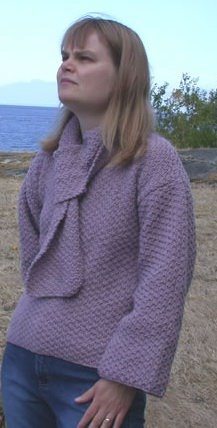
Later alone with Hubby I shared my thoughts on this encounter. His response, "What's the harm of learning something new?" What's the harm of learning something new... What is wrong with improving yourself. What is wrong with expanding your basis of knowledge. Thankfully I saw the same knitter the next day. I was far more respective. I continue to attempt to remain open. To this end, I have recently joined AKD (Assoication of Knitwear Designers). www.pkdg.org

AKD is in the process of changing their name from the Professional Knitwear Designers Guild.

Next post: Double cast on vs. Knit on: the pros and cons.

Thursday, March 09, 2006

a small personal victory

I have delayed today's planned post of: How I learnt the knit on cast on technique. Instead...

My electric bike and I had quite the adventure this morning.

You see I had to be somewhere at 9 am. When I set out there were large snow flakes in the air. ...but they were melting as soon as they hit the ground. ..and besides it doesn't snow on Mayne Island in March. So on I rode. As I rode, the snow flakes became more solid. They whacked me in the face. At first I thought, eh this is cool I get to drink while I ride. Well, it certainly was cool. Snow hung on to my lap, my shoulders, my arms, ...my face. I have to admit that there were times when I rode with my eyes closed. DON'T TRY THIS AT HOME, BOYS AND GIRLS. By the time I thought maybe I was insane to continue I was half way there. So the question was, "Turn back and accomplish nothing or continue and win a personal victory over the snow?" I continued. I reached my destination. ...and there was much cheering. Okay, the cheering was in my head only but hey, I made it.
This afternoon heading home from my big day, I was pleased that the snow had been replaced with sun.
Tomorrow who knows. It is suppose to snow again. Once again I have that same commitment. Please keep your fingers crossed for me.

If I make it home, I promise: How I learnt the knit on cast on technique.

Just to add a stitch or two of knitting to this knitting blog: the new TKGA message board is waiting for your posts. So run don't walk to www.TKGA.com I'll meet you there.

Wednesday, March 08, 2006

Counting on stitches

Happy Woman's Day!

After yesterday's beautiful sun-filled spring day, today is a disappointment. The weather can be summarized in two words: wet and windy. I know ... I know we all have our challenges.
Another of mine is casting on more than 90 stitches onto my needles (the cast on method discussed in my next post also makes casting on 90+ stitches easier). My brain just shuts off. I end up counting the same stitches over and over again always getting a different result. My hubby's, "92-95-98", sense of humour doesn't help. It is meet with an icy stare.
So I appreciate tips which make this process easier. Here are three.
The first two I learnt from my Grandma.
This tip uses safety pins. Finding safety pins may be the first problem you face when following this tip. The other might be removing the pins.
Thankfully the next two tips use scarp yarn. Something that you probably can easily find tons of. The last tip I recently learnt from the web.


It matters not which tip you follow, the process is the same. Start by casting on ten stitches then mark this stitch with scarp yarn or a safety pin. Continue in this manner until you have the correct amount of stitches on your needle.

Next post: How I learnt to knit on and other helpful cast on tips.

Tuesday, March 07, 2006

Proper knitting: how to make a slip knot...how to hold your yarn and needles.

I'm back...ready and willing to continue my blog.
What does my Dad's instructions on how to make tea have to do with knitting?
Well...like my Dad many knitters have much to share on the "proper" way to knit.
I'm no different...
Here is how I was taught to make a slip knot.
Begin by holding the yarn between your index finger and thumb.
Take your needle and place it behind the yarn running between your index finger and your thumb.

Draw the yarn down and over the yarn running around your thumb. You have made a knot.

Poke your needle through the hole and go over and grab the yarn in front of your index finger.
Pull the yarn off of your index finger and thumb and you have ...

Was that as clear as mud?

Here is another method.

Wrap the yarn around your finger.
Poke a loop of yarn through and you have...
a slip knot.

Making a slip loop: http://www.knitting.co.nz/site/page_affix/toaffix_learntoknit2/

How to hold your yarn and needles...
This is how I answer this question.

I hold my needles like a pen.

I hold my yarn by wrapping it around the index finger on my left hand.

For another way to answer this question: http://www.worldknit.com/howto/howtoknit/beginningtechniques/holdingyarn.html

So what we learn from this post is that there are many ways to knit properly. Embrace your own.

Tomorrow's post: Counting on stitches.
Much thanks to hubby for taking the pictures.

How to make a slip loop, hold the needles and yarn OR how to make a proper cup of tea

This beautiful and useful teapot was made by Jeanne Lewis. Visit her pottery studio on Mayne Island. Tell her Leanne sent you.

How my Dad made tea
Rule 1: NEVER wash a teapot with dish soap. Instead rinse in HOT water and leave to air dry.
Rule 2: ALWAYS warm the pot BEFORE you make the tea.
Rule 3: ALWAYS drink tea from a cup and saucer NEVER from a mug.
He was always a GENTLE man in the reinforcement of the of these rules.

Other helpful sites on this topic:

http://www.veg-world.com/articles/make-tea.htm

http://www.bbc.co.uk/food/recipes/mostof_tea.shtml

What does this have do to with knitting? Find out later today. Intriguing, eh?

Monday, March 06, 2006

How much yarn do you need?

Isn't that a loaded question? When Hubby asked my answer was always the same, "Lots". He has given up asking.

Today we are asking the question with regarding to the amount of yarn needed for casting on a certain number of stitches.

My Grandma taught me a fast and easy method.
For our example, let's say we want to cast on 30 stitches.
Step 1: You cast on ten stitches. Leave a long tail.
Step 2: Take the stitches off of your needle. Use the "casted" on yarn (the yarn which was once on your needle) as a guide. Measure out its length three times.
You now have sufficient yarn for 30 stitches.
Notice, however, that the tail has grown. So the method is not perfect but it works.

Lily Chin recommends that you use this rule of thumb: "use at least three times the width of your [finished] piece" http://www.diynet.com/diy/na_knitting/article/0,2025,DIY_14141_4246179,00.html

The problem with this method is that you need to know how wide your finished project will be. If you are simply fouling around and don't have a finished project in mind, like we are doing, this method is hard to follow.

Tomorrow: making a slip loop, holding the needles, and holding the yarn. Or how to make a proper cup of tea.

Sunday, March 05, 2006

Let's here it for the working yarn


Working yarn: end which has a direct connection to the yarn ball.
End which creates each and every stitch.

Okay, if you don't think I'm nuts yet you certainly will today. You see I have recently learnt a life lesson from knitting. To be accurate, the lesson was learnt from the process of casting on. You see recently I have been pondering the "tail" and "working yarn". It seemed to me that the "tail" was just kind of along for the ride. The "working yarn" was actively involved in the process of knitting. How like life this seems to be. Do you know the maxim: 80% of the work is done by 20% of the people? Well, nowhere is this seen clearer than in a small community. Not only do 80% of the population (the tail) get to simply hang around but they also get to give feedback on the job that has been done. While 20% of the population (the working yarn) simply gets to work their butt off. Does that sound fair? No. ...and yet when I tried to remove either the tail or working yarn from the knitting process it just didn't work. Both are required to knit. We have no right to demand the same kind of commitment or energy from our cohorts. We are all different.

I received another interesting email. I enjoy frequenting the TKGA (the knitting guild association) message board both as an active member and as a lurker. Well, the email stated that after March 7th this pass-time will temporarily be interrupted. The message board will be going through some upgrading. The email went on to advise me: 'We are told that your current posts will not be lost...but just in case something should go amiss, we are alerting you now so you have time to copy items you may wish to repost once the new Board goes live.'

Tomorrow: So how do you know how long your tail needs to be? This question will be addressed in my next post.

Saturday, Mar